
Memorial Scrapbook Kits: What You Need and What to Skip
Choose a small, documented memorial scrapbook kit that fits the book you will make, and leave out themed filler, risky adhesives, and tools you may never use.
Disclosure: Legacy Memory Book may earn a commission if you buy through links on this page, at no extra cost to you. Recommendations are based on the stated criteria, reader fit, limitations, and preservation needs—not commission rate. No affiliate tracking links are active in this article.
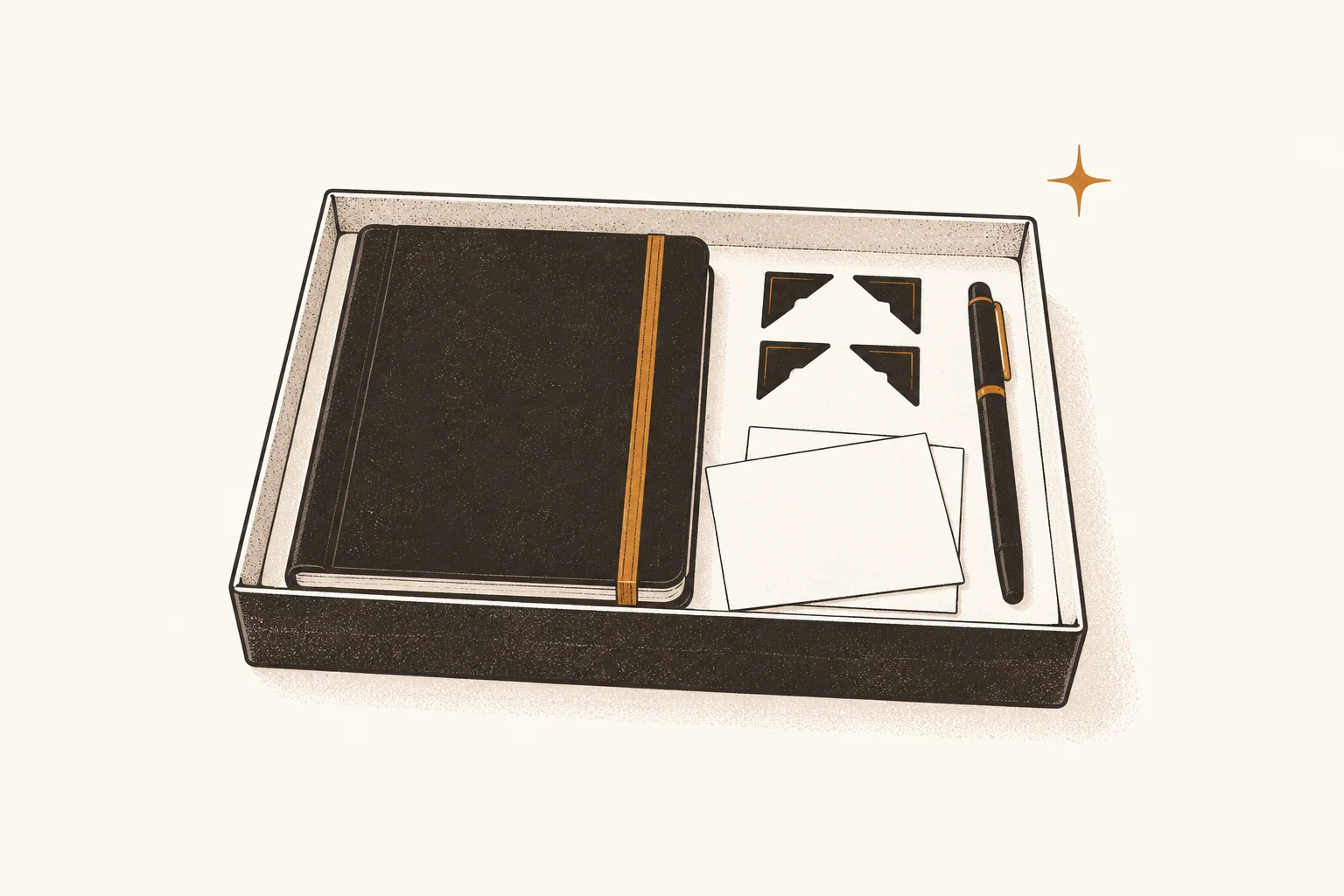
The best memorial scrapbook kits reduce decisions without asking you to crop an irreplaceable photograph, trust an unexplained “archival” label, or buy a box of decorations you will not use. For most beginners, the useful core is an album, compatible pages or protectors, safe mounts for copies, a caption pen, and a separate place for originals.
Choose the book format first. The site’s guide to digital, physical, and hybrid memorial scrapbooks can help with that decision. A physical kit is a poor bargain if you ultimately need a shareable digital book, while a compact pocket album can be exactly right for a 10-page family edition.
Short answer: Buy a complete kit only when the album size, page system, material documentation, and visual tone suit your project. Otherwise, build a five-part kit from compatible components. Use copies in the working book when an original is unique, fragile, borrowed, or hard to replace.
Quick comparison: four sensible kit routes
| Kit route | What it solves | Essential pieces | Main limitation | Best fit |
|---|---|---|---|---|
| Pocket-page starter | Fast assembly and easy rearranging | Album, compatible pocket pages, blank journaling cards, pen | Fixed pocket sizes limit layout freedom | First book, low-energy project, standard prints |
| Guided page kit | Coordinates pages and gives layout instructions | Album, page protectors, base pages, guide, simple mounting method | Themes and captions may not fit the person | Maker who wants a defined visual sequence |
| Build-your-own archival kit | Lets you verify each material and keep the design quiet | Expandable album, documented pages, corners, pen, storage box | Requires several separate choices | Unique originals, mixed keepsakes, preservation priority |
| Storage-first kit | Organizes originals before any pages are made | Fitted box, folders or sleeves, labels, index | It is not a finished scrapbook | Fragile, inherited, or unsorted collection |
There is no universal winner. The right route removes the part that is stopping you: layout decisions, supply compatibility, material uncertainty, or collection disorder.
What every useful memorial scrapbook kit needs
1. An album sized for a bounded edition
A smaller, expandable album is easier to finish and easier to support while pages are turned. The Library of Congress scrapbook guidance recommends keeping an album’s overall size and weight modest and choosing a structure that can expand, such as a ring binder.
Start with the material you already plan to include. Standard 4-by-6-inch prints suit pocket systems. Full-page letters, certificates, or long stories need larger leaves—or, preferably, reduced copies that preserve the full original elsewhere.
Check three details before buying:
- the exact page size and usable pocket dimensions;
- the maximum supported page count or spine thickness;
- whether replacement pages are currently available and clearly compatible.
Avoid a proprietary album if you cannot confirm how to obtain pages later. A coordinated cover is less important than a book you can complete, correct, and expand without improvising a new binding.
2. Pages or protectors with named materials
For paper leaves, look for acid-free and lignin-free construction. For clear sleeves and pockets, look for uncoated polyester, polyethylene, or polypropylene. The Library of Congress lists those plastics for long-lasting albums and advises against self-adhesive tape, staples, paper clips, and rubber bands.
“Photo safe” and “archival” are not complete specifications on their own. A stronger product page names the material and, when direct photograph contact matters, states whether the exact item has passed the Photographic Activity Test (PAT). The site’s explanation of acid-free, lignin-free, photo-safe, and archival claims shows how to read those labels without treating any one term as a guarantee.
3. A copy-safe mounting method
For a traditional page, use appropriately sized photo corners so adhesive does not touch the print. For a pocket album, use correctly fitted sleeves so photographs do not bow or slide excessively.
If a photograph is curled, cracked, flaking, sticky, or unusually valuable, do not force it into a kit. Follow the photograph-preservation workflow and use a scan or duplicate print in the album. The purpose of the kit is to support the story, not to turn the only original into a craft material.
4. One dependable caption tool
A kit needs a way to record names, dates, sources, and uncertainty. It does not need a dozen marker colours. Choose one dark pen that the manufacturer specifies for the page material, then test it on a spare sheet for drying, bleed, and show-through.
Do not write directly on the image surface of a unique photograph. Put the caption on the page, a separate journaling card, or an enclosure label. A soft graphite pencil can be useful on suitable paper enclosures, but it is not a universal writing tool for plastics or coated pages.
5. A separate home for originals
An album kit rarely provides adequate storage for everything left out of the book. The U.S. National Archives recommends protective enclosures, stable storage materials, and locations away from attics, basements, leaks, heat, and extreme humidity in its family-archive storage guidance.
Add one fitted box or folder system to the budget. Record which book page uses each copied item, who owns the original, and where it will be returned. For an inherited collection, a storage-first kit may do more good than a scrapbook kit full of embellishments.
Current kit models: where each one helps and falls short
These examples illustrate distinct kit models. They are not first-hand tests, fixed-price recommendations, or a claim that every product from a brand uses the same materials. Verify the exact item and current terms before ordering.
Creative Memories album kits: strongest for guided layouts
The official Creative Memories album-kit guide says its current kits combine a 12-by-12-inch album, pocket pages, preprinted base pages, cut-apart sheets, and a layout guide. Its separate product documentation identifies core refill pages as acid-free, lignin-free, buffered, and PAT tested.
Useful when: You want a page-by-page plan and enjoy traditional 12-by-12-inch layouts.
Check first: Whether the current theme and preprinted phrases suit a memorial book, whether all direct-contact components carry the documentation you require, and whether you want to remain within its compatible page system.
Skip when: You need a quiet, text-led book; have limited work space; or would discard most decorative pieces.
Scrapbook.com Simple Scrapbooks kits: strongest for quick pocket assembly
A current Simple Scrapbooks complete-kit page lists a 6-by-8-inch ring album, pocket protectors, themed cards, and a pen. The pocket format reduces cutting and makes rearranging possible.
Useful when: Most photographs are standard sizes and a small album feels achievable.
Check first: The exact protector material, the suitability of the themed cards, the number and orientation of pockets, and replacement-page availability. The cited product page is wedding-themed, so it demonstrates the format rather than a memorial-specific recommendation.
Skip when: The printed sentiments speak for the person, assume a relationship, or crowd out the family’s own words.
Archival Methods storage kits: strongest for organizing originals
The Archival Methods Create-a-Kit combines an outer photo box with selectable caddies, index cards, bags, and other components for mixed collections. It is designed for storage rather than finished-page storytelling.
Useful when: The urgent job is to sort, identify, and house photographs before choosing a book format.
Check first: Fit, capacity, exact enclosure materials, PAT documentation for direct contact, and whether bags are appropriate for the photograph process and storage environment.
Skip when: You already have safe storage and need a book-making system, not another archive box.
What to skip in a memorial scrapbook starter kit
More pieces do not make a kit more complete. Leave these out unless the page plan gives each one a job:
- Themed phrases that write the memory for you. “Forever,” “best day,” or relationship labels may be inaccurate, painful, or simply unlike the family voice.
- Unnamed plastics and vague archival badges. Ask for the exact material and relevant testing instead of relying on a green leaf icon or marketing adjective.
- Self-stick or so-called magnetic pages. Pressure-sensitive adhesive and aging plastic overlays can damage photographs and make later removal difficult.
- Permanent adhesive for unique originals. A claim that an adhesive is photo safe does not make an irreversible mounting decision necessary.
- Bulky metal, wood, resin, or layered embellishments. They strain bindings and can press into facing photographs.
- A large cutting system before you know the layout. Scissors and a ruler may be enough for copies; unique originals should not be trimmed to fit.
- A monthly subscription for one bounded book. Repeated deliveries create inventory rather than progress unless you already make books regularly.
- Glitter, loose fibres, scented materials, and wet media beside originals. They add transfer, abrasion, moisture, or unknown-material risks.
Build a minimal kit instead
If no complete kit passes the checks, assemble this small version:
- One album: enough room for the planned edition plus a few correction pages.
- One page system: documented paper leaves or clear pockets that fit the album.
- One mounting method: photo corners for sound copies, or pockets with the right dimensions.
- One caption pen: tested on spare page material.
- One preservation folder or box: for originals, permissions, and source notes.
Add only the tools demanded by a sample spread. If that spread needs a straight cut, add a trimmer. If it needs a quiet title page, add one pack of plain compatible paper. If it works without decorative supplies, keep the kit small.
The beginner memorial scrapbook checklist covers source capture, permissions, backups, page planning, and proofing. Complete its first-page test before buying enough material for the entire book.
A five-minute kit check before checkout
Ask these questions on the product page or in writing:
- Does the album fit the photographs and the planned number of pages?
- Are the paper, plastic, and mounting materials named precisely?
- Is PAT status stated for the exact item that will touch photographs?
- Can pages be removed, reordered, and purchased separately?
- Can I replace themed cards with my own captions?
- Will any adhesive touch an original?
- Does the finished album have a supported storage location?
- Am I buying a required component, or a decoration without an assigned page?
If a seller cannot answer the first four questions, do not let a large piece count make the decision for you.
Frequently asked questions
Is an all-in-one scrapbook kit cheaper than buying separately?
Sometimes, but only if you will use the included album, pages, and most consumables. Compare the cost of those essentials—not the advertised piece count—with a five-part build-your-own kit. Shipping, incompatible refill pages, and unused decorations can erase the apparent saving.
Do I need an acid-free adhesive?
For paper layers and replaceable copies, a documented adhesive may be appropriate. For unique photographs, letters, or cards, the safer default is no adhesive contact: use a copy, a suitable enclosure, or corners that hold the object without attaching to it.
Is a memorial-specific theme necessary?
No. A plain album with the person’s photographs, stories, handwriting, and accurate captions is often more specific than a kit of prewritten memorial phrases. Neutral materials also leave room for humour, ordinary routines, and complex relationships.
Should I buy 12-by-12-inch or 6-by-8-inch?
Choose 6-by-8-inch for a short, portable edition built around standard prints and brief captions. Choose 12-by-12-inch when you need longer stories, larger copies, or several items on a page and can safely support and store the larger book.
Can I put original keepsakes in the kit?
Only after checking condition, material compatibility, thickness, ownership, and the consequences of repeated handling. For most one-of-a-kind paper and photographs, scan or photograph the item, place the copy in the book, and store the original separately.
The next useful step
Select five representative items and make one sample spread from copies. That single page will tell you more about album size, pocket orientation, caption space, and missing supplies than a 100-piece assortment can.
The right memorial scrapbook kit is not the fullest box. It is the smallest documented system that protects the originals, leaves room for the family’s own words, and makes the next page possible.